Blog
 February 22, 2018
Italy Has a Free Wine Fountain - And It's Open 24 Hours a Day
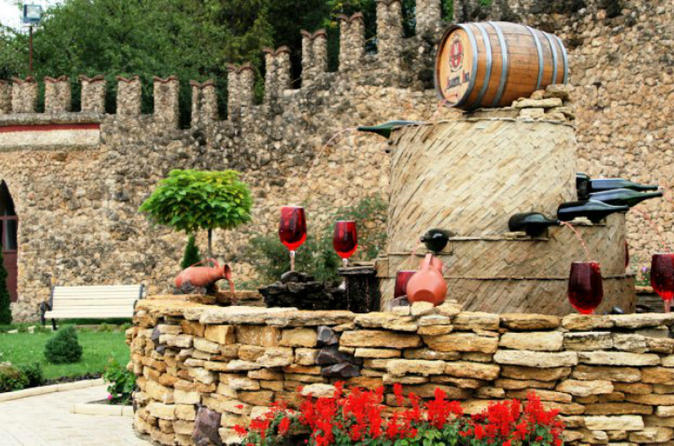
Fountains are everywhere in Italy. Rome alone has over 2,000 of them and if you're planning to see them in person, a guided tour of Rome puts the city's most iconic landmarks within easy reach. But somewhere in the rolling vineyards of Abruzzo, tucked along an ancient pilgrimage road, there is one fountain that does something none of the others can: it dispenses free red wine, around the clock, to anyone who stops by.
No ticket. No membership. No closing time. Just wine, flowing from a stone basin beneath a wooden barrel, in a small village most of the world had never heard of — until the internet found it.
This is the story of the Fontana del Vino, Italy's most generous and most joyful fountain.
What Is the Fontana del Vino? (Italy's Free Wine Fountain Explained)
The Fontana del Vino — literally, the Wine Fountain — is exactly what it sounds like: a publicly accessible fountain in the Abruzzo region of central Italy that dispenses free red wine, 24 hours a day, 7 days a week, every day of the year.
It is not a tourist gimmick. It is not seasonal. It has been flowing continuously since it was installed in 2012, maintained by the family winery that built it, and it shows no signs of stopping.
Where Exactly Is the Wine Fountain in Italy?
The fountain is located in Caldari di Ortona — a small village in the province of Chieti, in the Abruzzo region of central Italy. The full address is Contrada Caldari, 66026 Ortona (CH). It sits approximately 20 km south of Pescara, the nearest major city, and around 200 km east of Rome. The surrounding landscape is pure Abruzzo: terraced vineyards, olive groves, and — if you look in the right direction — the shimmer of the Adriatic Sea.
Who Built the Wine Fountain — and Why?
The fountain was built by Dora Sarchese, a family-run winery based in Ortona, in partnership with a non-profit organisation dedicated to preserving a local pilgrimage route. The goal was to offer traditional Italian hospitality to passing pilgrims, while celebrating the winemaking heritage that defines this corner of Italy - the same spirit of generous, unhurried culture you encounter on a private tour of the Amalfi Coast or anywhere else in southern and central Italy. The fountain was designed by local architect Rocco Valentini, who modelled it on a traditional drinking water fountain: a stone basin installed beneath a life-sized wooden wine barrel.
What Type of Wine Flows From the Fountain?
Not a cheap pour — Montepulciano d'Abruzzo, the region's flagship DOC red wine. It is a full-bodied, dry red with deep colour, earthy character, and genuine quality. Dora Sarchese replenishes the fountain regularly and has never let it run dry. Whatever your expectations of "free wine from a public fountain," the reality is better.
Why Is There a Free Wine Fountain in Italy?
This is the question almost everyone asks, and the answer is more interesting than you'd expect. The fountain was not built for viral fame — though it certainly achieved it. It exists at the intersection of pilgrimage tradition, regional pride, and the kind of generous, unhurried hospitality that Italy does better than almost anywhere else.
The Pilgrimage Route — Cammino di San Tommaso
The fountain sits along the Cammino di San Tommaso, a 196-mile pilgrimage route that runs from Ortona to Rome. Pilgrims walk it to visit the remains of Saint Thomas the Apostle, which are held at Ortona's Cathedral of San Tommaso. Like all great pilgrimage routes, the Cammino is long, physically demanding, and reliant on the kindness of the communities along the way. The wine fountain was installed specifically to serve those walkers — a modern expression of an ancient tradition of hospitality toward travellers on sacred roads.
The Spanish Inspiration — Camino de Santiago
The idea did not come from nowhere. In 1991, the Bodegas Irache winery in Navarra, Spain, installed a free wine fountain along the Camino de Santiago — one of Europe's most walked pilgrimage routes. It became one of the Camino's most beloved landmarks, dispensing millions of litres of free Navarra red to grateful pilgrims over three decades. When Dora Sarchese heard about it, the parallel was impossible to ignore: Abruzzo had its own ancient pilgrimage road, its own exceptional wine, and its own deep tradition of generosity. Italy's version opened in 2012.
Why Dora Sarchese Makes It Free
Dora Sarchese absorbs the cost entirely and asks for nothing in return — no registration, no donation, no conditions beyond a quiet request that the fountain not be misused. The winery has stated clearly that the fountain is intended for pilgrims and respectful visitors, not for drunkards or louts (their words, and a reasonable enough restriction). Beyond the genuine spirit of ospitalità, there is an elegant logic to it: thousands of people each year discover Montepulciano d'Abruzzo for the first time at that stone basin and go looking for a bottle to bring home. A marketing strategy that barely feels like one.
How to Visit the Wine Fountain in Abruzzo — A Practical Guide
The good news: visiting is straightforward. The fountain is accessible, the road signs in the area point you toward it, and the 24-hour operation means you can work it into almost any Abruzzo itinerary without planning around opening times.
Where Is Caldari di Ortona?
Caldari di Ortona is a small agricultural village on the Adriatic coast of Abruzzo, in the province of Chieti. It is not a place most travellers would find on their own itinerary — which is part of its charm. The village is quiet, the roads are lined with vines, and the pace of life moves the way it has for centuries.
Getting to the Wine Fountain
By car is the easiest option. From Rome, the drive takes approximately 2.5 hours via the A25 motorway toward Pescara, then south along the coast. From Pescara, allow around 30–40 minutes. The fountain is signposted in the local area and easy to find with a GPS set to Contrada Caldari, Ortona.
By train, the nearest station is Ortona, served by regular trains from Pescara (approximately 30 minutes). From Ortona station, the fountain is a short taxi or rideshare ride away. There is no direct public transport connection to the fountain itself.
Travelling by private chauffeur is the most comfortable option — particularly if you want to combine the fountain with a broader exploration of Abruzzo's vineyards and coastline without the logistics of rural Italian train connections.
What to Expect When You Arrive
The fountain itself is modest - which is exactly right. A stone basin, a wooden barrel, a tap. No gift shop, no queue, no ticketing system, no one watching. You walk up, turn the tap, and pour. The wine comes out cold and clear and genuinely good. Most visitors bring their own cup or glass; a few arrive with something considerably larger, which the winery gently discourages. The atmosphere is quiet and unexpectedly moving — there is something about a gift freely given, in a beautiful landscape, with no strings attached, that stays with you. It is the kind of quiet, unhurried discovery that defines the best Italian travel — the sort of moment you find when you explore Italy off the beaten path with a private driver rather than following a fixed group itinerary.
Is the Wine Fountain Still Open?
Yes - as of 2025, the Fontana del Vino is fully operational. It runs 24 hours a day, 365 days a year, and has done so continuously since 2012. Dora Sarchese has never closed it and has never let it run dry. If you are planning a visit, no advance booking or permission is required. Just show up.
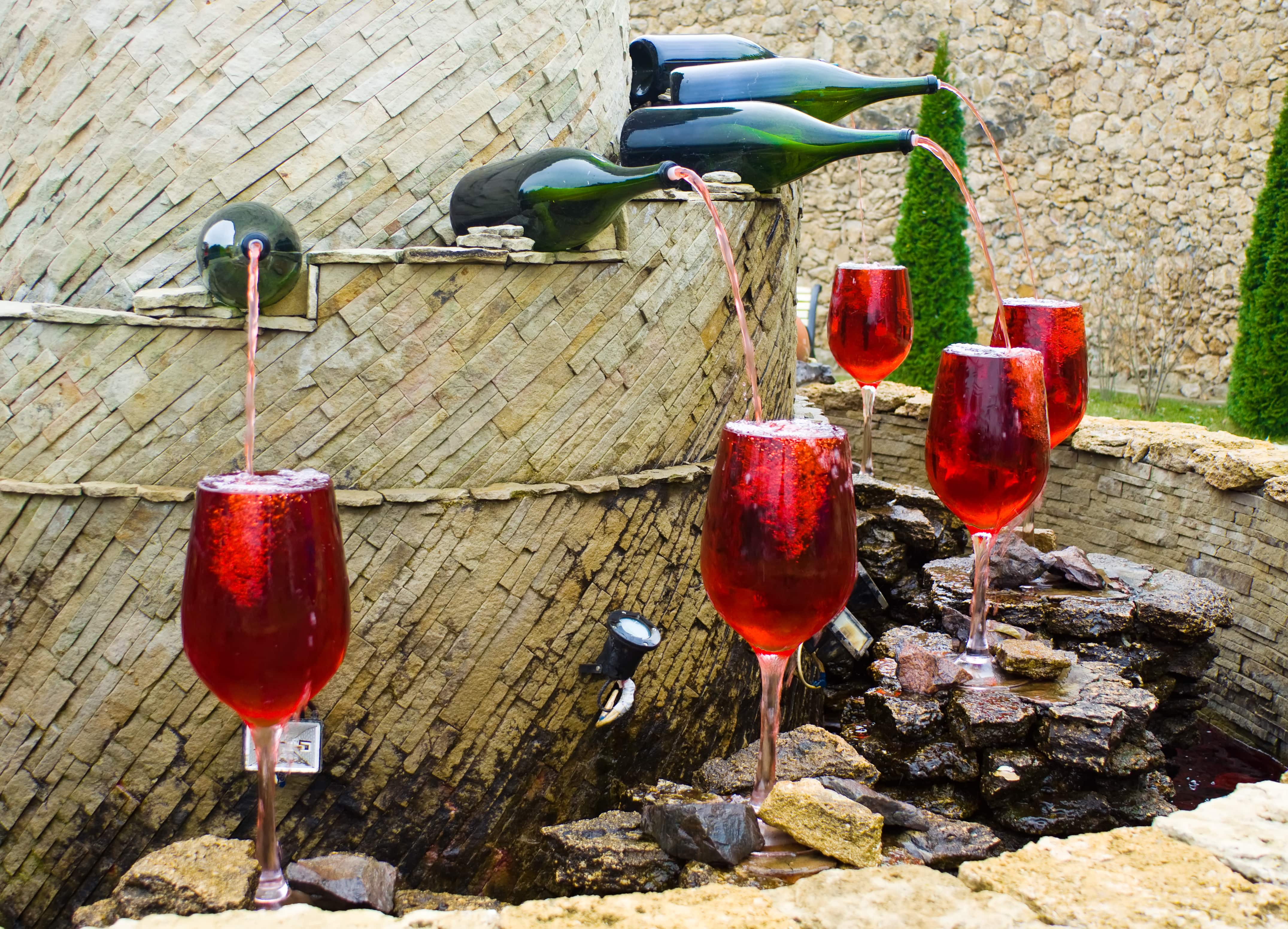
Abruzzo — Italy's Most Underrated Wine Region
Most travellers rush through Abruzzo on their way between Rome and the south without stopping. Those who do stop discover one of Italy's most quietly impressive regions: dramatic Apennine mountains, an unspoiled Adriatic coast, medieval hill towns, and wine that belongs in the same conversation as anything Tuscany produces — at a fraction of the price and with none of the crowds.
What Wine Does Abruzzo Produce?
The region's flagship is Montepulciano d'Abruzzo — the same wine flowing from the fountain — a rich, full-bodied DOC red that has earned international recognition and consistent critical praise. Abruzzo also produces Trebbiano d'Abruzzo, a crisp, mineral-driven white, and Cerasuolo d'Abruzzo, one of Italy's finest serious rosés. The combination of Apennine altitude, Adriatic sea breezes, and centuries of viticultural tradition produces wines of genuine character and remarkable value.
Other Things to Do Near Ortona
Ortona itself repays a few hours: the Cathedral of San Tommaso, the 15th-century Aragonese Castle perched above the Adriatic, and the Canadian War Cemetery — one of Italy's most significant and affecting Second World War memorial sites. The nearby medieval town of Lanciano has a beautifully preserved historic centre. Inland, the Majella National Park offers some of Abruzzo's most dramatic mountain hiking. The region is best explored slowly, by car, over two or three days. The region is best explored slowly over two or three days — and for those arriving by sea, shore excursions from Naples offer a natural gateway into central Italy's Adriatic side.
Is Abruzzo Worth Visiting for Wine Lovers?
Unreservedly, yes. Abruzzo offers DOC-quality wine at prices that feel almost unreasonably fair, in a landscape that genuinely earns the word beautiful, among producers who still have time to welcome visitors properly. Add a 24-hour free wine fountain to the itinerary and the case becomes almost unanswerable. Pair it with a stop in Naples to try sfogliatella and Neapolitan espresso and you have one of Italy's most rewarding regional itineraries.
Other Wine Fountains and Wine Windows in Italy
The Fontana del Vino may be Italy's most famous freely flowing wine source, but it is not the country's only one. Italy has a long and pleasingly eccentric relationship with making wine accessible in unconventional ways.
The Wine Windows of Florence — Buchette del Vino
Cut into the stone facades of Florentine palazzos from the 17th century onwards, buchette del vino are tiny arched windows through which Medici-era wine merchants sold wine directly to the street, by the flask. After centuries of disuse, a number were famously reopened during the COVID-19 pandemic to serve contactless wine to Florentines — a piece of Renaissance infrastructure perfectly suited to a 21st-century problem. Around a dozen remain active in Florence today, mostly in the Oltrarno and Santa Croce districts. Florence is worth at least a full day of exploration beyond its wine windows — a private city tour of Florence covers the Uffizi, the Duomo, and the neighbourhoods that most visitors never find on their own.
Are There Other Wine Fountains in Italy?
A small number of Italian wineries have installed wine fountains for guests on their own estates — particularly in Tuscany and Emilia-Romagna — and during local festivals, temporary wine fountains occasionally appear in town squares across Piedmont and Veneto. None, however, match the Fontana del Vino's combination of permanence, public access, and round-the-clock generosity. It remains in a category of its own.
The Original — The Wine Fountain on the Camino de Santiago
The Bodegas Irache fountain in Navarra, Spain, has been flowing since 1991 and is now one of the Camino de Santiago's most iconic waypoints. Pilgrims arrive from across the world to fill their cups — and occasionally their boots — from its two taps: one for water, one for wine. It inspired Italy's fountain directly and remains, three decades on, one of the most quietly wonderful things a winery has ever done.
Italy has a way of exceeding expectations — and the Fontana del Vino in Caldari di Ortona is one of the most charming examples of that quality anywhere in the country. A free glass of good Abruzzo red, in a vineyard landscape, on an ancient pilgrim road, with no conditions and no closing time: it is the kind of thing Italy does that makes the rest of the world quietly envious. For those who want to experience Abruzzo and the wider wonders of central Italy at their own pace and in proper comfort, Benvenuto Limos offers private chauffeur-driven tours across the region - because the best Italian discoveries are almost always the ones you weren't rushing past.
Frequently Asked Questions
1. Where is the wine fountain located in Italy?
The wine fountain, known as Fontana del Vino, is located in Caldari di Ortona, in the Abruzzo region of Italy. It sits along the pilgrimage route Cammino di San Tommaso.
2. Does the fountain really serve free wine?
Yes, the fountain genuinely serves free red wine to visitors. It is open 24 hours a day, 7 days a week, and anyone can drink from it.
3. Who built the Italian wine fountain?
The fountain was built by Dora Sarchese, a local winery, in collaboration with a non-profit organization dedicated to preserving the pilgrimage route.
4. What is the purpose of the wine fountain?
The main purpose of the wine fountain is to offer refreshment to pilgrims walking the Cammino di San Tommaso, while also promoting local culture, hospitality, and wine traditions
5. Is the wine fountain meant for tourists or pilgrims?
While tourists are welcome, the fountain is primarily intended for pilgrims, not excessive drinking. The creators have clearly stated it is not meant for drunkards or misuse.
6. What type of wine flows from the fountain?
The fountain serves locally produced red wine from the Abruzzo region, reflecting the area’s strong wine-making heritage.
7. Are there other wine fountains like this in the world?
Yes, the idea was inspired by a wine fountain along the Camino de Santiago pilgrimage route in Spain, though Italy’s Fontana del Vino is one of the most famous.
8. Where exactly is the wine fountain in Italy — what is the address?
The Fontana del Vino is located at Contrada Caldari, Ortona, in the Abruzzo region of central Italy. It sits along the Cammino di San Tommaso pilgrimage route. The nearest major city is Pescara, approximately 20 km north of Ortona.
9. Is the wine fountain in Italy still open?
Yes — as of 2025, the Fontana del Vino remains open and operational. It runs 24 hours a day, 7 days a week, all year round. The fountain is maintained by the Dora Sarchese winery and has been continuously operating since it was installed.
10. What wine comes out of the Italian wine fountain?
The fountain dispenses Montepulciano d'Abruzzo, the signature red wine of the Abruzzo region. It is a full-bodied, dry red wine with deep colour and earthy character — one of central Italy's most respected and widely exported wine varieties.
11. Is there a limit to how much wine you can drink at the fountain?
There is no formal limit on the quantity, but the Dora Sarchese winery has made clear that the fountain is intended for pilgrims and respectful visitors — not for excessive consumption. The spirit of the fountain is generosity and tradition, not a free bar. Most visitors take a glass or two and move on.
12. Why is the wine fountain free?
The fountain was built by Dora Sarchese winery in partnership with a non-profit organisation dedicated to preserving the Cammino di San Tommaso pilgrimage route. Offering free wine to pilgrims is an act of traditional Italian hospitality (ospitalità) — and, practically, excellent promotion for Abruzzo's wine culture and the winery itself.
13. Are there other wine fountains or wine windows in Italy?
Italy has a related tradition called buchette del vino — small wine windows built into the facades of Florentine palazzos, through which wine was sold directly to the street. Several of these historic windows were revived during COVID and remain active today in Florence. The wine fountain in Caldari di Ortona remains the only true 24-hour free outdoor wine fountain in Italy.
-
 NEXT POST Rome’s Colosseum Glows Red