Blog
 October 10, 2017
10 Things You Must Know About Gondolas
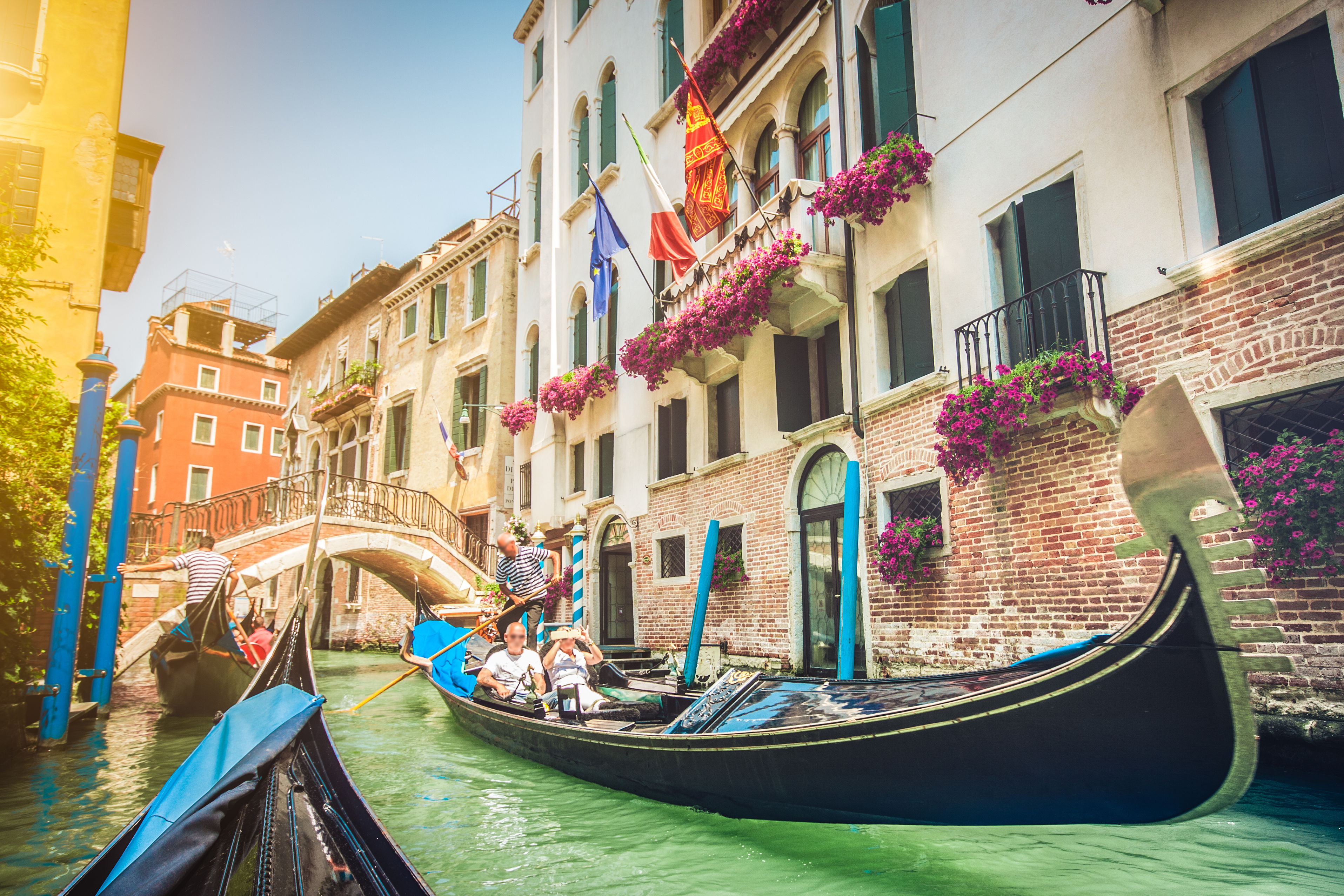
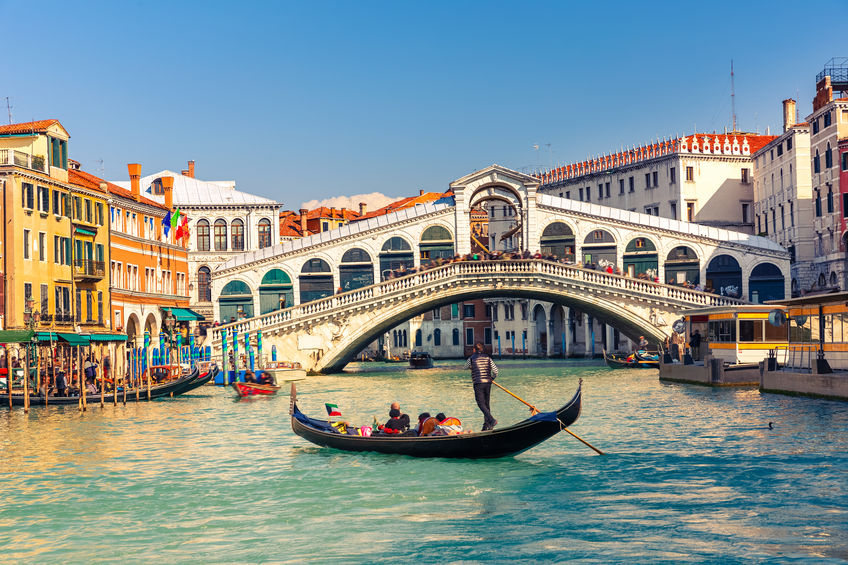
Symbolism as an avant-garde is as old as 200-300 years, but it is more than just an artistic movement. Symbolism has always been a part of the art of depiction of a place, time, event, person etc., encompassing the portrayal of the culture. Today places (countries, geographical regions, cities, towns) are most of the times represented by symbols. Cities across the globe are represented by symbols like- Apple (New York City), Eiffel Tower (Paris), Big Ben Tower (London). One such city is the ‘city of water’- Venice, and there are a lot of symbols which depict Venice. One of the symbols which is widely used to depict Venice is the Gondola boats. Just like any other public transportation in a city, Gondola ride is one of the modes of public transportation which runs over the Grand Canal which runs through the heart of Venice. But Gondolas are not only a mode of transportation but has a lot to it.
What Is a Gondola Ride Like?
A gondola ride is one of Venice's most iconic experiences — a slow, intimate journey through the city's network of canals aboard a hand-crafted wooden boat steered by a licensed gondolier. Standard rides last around 30 minutes, with capacity for up to six passengers. Official prices start at €90 per gondola during the day, rising to €110 after 7 PM — making it surprisingly affordable when split among a group. Singing is not included by default and must be booked separately. For the best experience, go at sunrise or sunset, when the light on the canals is at its most magical.
Gondola Ride Quick Reference
| Private Ride | Shared Ride | |
|
Price |
€90 (day) / €110+ (evening) per gondola |
€25–€40 per person |
|
Capacity |
Up to 5–6 passengers | Up to 6 passengers |
|
Duration
|
30 minutes standard | 30 minutes standard |
|
Route
|
Flexible / gondolier-guided | Fixed by operator |
| Singing | Not included (bookable separately) |
Not included (some tours include it) |
| Best for | Couples, families, photographers |
Solo travellers, budget travellers |
Here are 10 amazing things about Gondolas ride you should know:
1. When Were Gondolas Invented? A Brief History
The gondola is older than most of Venice's famous landmarks. Written records place gondolas on the city's canals as far back as the 11th century — making them approximately 1,000 years old.
By the 16th and 17th centuries, gondolas had become the primary mode of transport for Venice's wealthy classes, and the canals were crowded with boats decorated in vivid colours, gilded ornaments, and rich fabrics. It was this ostentatious display that prompted the Venetian Senate to pass a law in the 16th century mandating that all gondolas be painted black — a regulation designed to curb excess and restore a sense of civic equality among the city's elite. That law has never been repealed.
At their peak in the 18th century, there were an estimated 10,000 gondolas working Venice's waterways. Today, fewer than 400 remain — a reflection of the rise of motorised water transport, the vaporetto, and the gradual shift of gondolas from everyday utility to cultural heritage. What was once the city's bus is now its most treasured living tradition.
2. Asymmetrical
It would be a surprise to know that the beautiful leaf-shaped Gondolas boat are asymmetrical. Every Gondola is a little more than 35 feet in length and 4 and a half feet wide. Although the left side of every Gondola boat is 10 inches long, as this asymmetry provides a counterbalance with the weight of the Gondolier.
3. How Does Someone Become a Gondolier?
Becoming a gondolier is one of the most demanding professional qualifications in Italy — far more rigorous than most people expect.
The 400-Hour Training Programme
Aspiring gondoliers must complete approximately 400 hours of supervised training before they are eligible to sit the licensing exam. The curriculum covers rowing technique, canal navigation, Venetian history, basic first aid, and foreign language skills — since gondoliers regularly interact with international visitors. The training is physically demanding; rowing a 700kg gondola with a single oar from a standing position requires considerable strength, balance, and precision.
The Gondolier License Exam — What It Tests
The final exam is administered by the Ente Gondola and tests candidates on their ability to manoeuvre a gondola safely through Venice's canals, including tight turns, passing under low bridges, and navigating heavy canal traffic. Knowledge of Venice's waterways, landmarks, and history is also assessed. The pass rate is not guaranteed, and candidates who fail must wait before attempting again.
Can You Be a Gondolier and a Singer?
Not automatically. Singing is a separate qualification entirely. Gondoliers who wish to serenade passengers must pass an additional exam testing their vocal ability and repertoire of traditional Venetian songs. Many gondoliers hold only the rowing licence — which is why singing during a ride is never guaranteed unless specifically booked.
How Many New Gondoliers Are Licensed Each Year?
Very few. Typically only three to four new gondolier licences are issued in Venice each year, making it one of the most exclusive professional certifications in Europe. The number is kept deliberately low to maintain quality standards and protect the tradition. Many licences pass from father to son — gondolering remains a deeply familial profession in Venice.
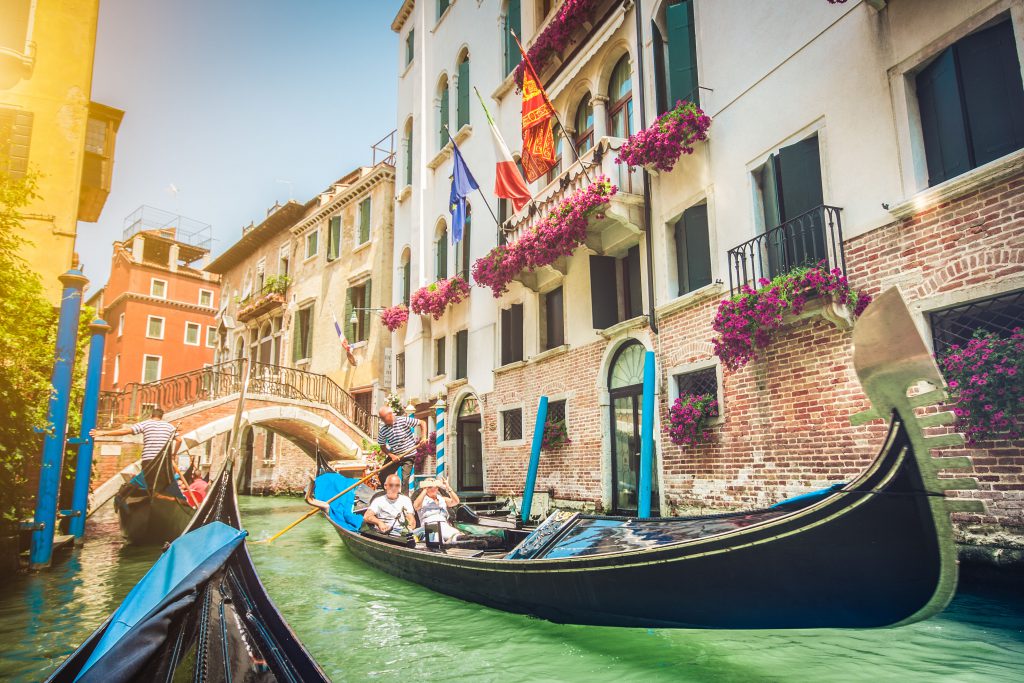
Venetian gondola ride
4. Why Do Gondoliers Wear Striped Shirts? (The Uniform Explained)
The gondolier's uniform is one of the most recognisable images in Venice — but it is far more than a costume for tourists.
The History Behind the Striped Shirt
The striped shirt traces its roots to 19th-century Venetian maritime culture, when sailors and boatmen across the Adriatic adopted horizontal stripes as working attire. Over time, the look became inseparable from the gondolier's identity, eventually becoming formally regulated by the Ente Gondola — the official body that governs gondola standards in Venice.
Why Some Gondoliers Wear Red Stripes and Others Black
Both are traditional and both are permitted. Red-and-white stripes are the classic summer variant, associated with warmth, festivity, and the high season. Black-and-white stripes are the more formal alternative, often worn in cooler months or by gondoliers who prefer a more understated look. The choice is largely personal within the regulations — but the stripe itself is non-negotiable.
What Gondoliers Wear in Winter vs. Summer
In summer, the uniform is a striped short or long-sleeved shirt, often paired with a straw hat and dark trousers. In winter, gondoliers switch to a black reefer jacket — a double-breasted wool coat that protects against the damp, cold winds that sweep through Venice's canals between November and March. The hat is typically replaced with a dark cap in colder months.
5. Maintenance
Not only your Mercedeses and Maseratis are high maintenance, these floating beauties too require good maintenance which costs a lot. The hulls of the Gondola boats are to be varnished every month to save them from the pests that eat the wood.
6. Black
This fact reminds of the famous statement made by Henry Ford for the color of Model T- “you can have any color as long as it is black.” The city of Venice has a law that all the Venetian gondolas should be black in color, and this law goes back to the 16th century.
7. Weight
Do not under estimate anything of these beautiful boats, especially the weight. With a length of 35 feet, these Gondolas weigh about 700 Kgs which is more than the weight of an average horse.
8. The Anatomy of a Gondola — Parts & Construction
A gondola looks deceptively simple from the outside. Up close, it is a masterpiece of traditional craftsmanship.
The Ferro — The Iron Prow Ornament
The ferro (ferro di prua) is the distinctive iron blade that curves up from the front of every gondola. It is not merely decorative. The ferro serves as a counterweight to balance the gondolier standing at the stern, and its shape carries deep symbolic meaning. The six forward-facing prongs represent Venice's six historic districts — the sestieri. The single prong curving backward represents the Giudecca island. The broad curved blade at the top is said to mirror the shape of the Doge's ceremonial hat.
The 8 Types of Wood Used in Gondola Construction
Each gondola is built from eight different types of wood, each selected for a specific structural role: cherry, walnut, mahogany, oak, larch, fir, lime, and elm. The combination provides the precise balance of flexibility and rigidity that allows the gondola to navigate narrow canals without cracking under the stress of the water. The hull is built asymmetrically — the left side slightly wider than the right — to compensate for the weight and rowing position of the gondolier.
How Long Does It Take to Build a Gondola?
A single gondola comprises around 280 individual components and takes a team of skilled craftsmen — working in traditional workshops called squeri — several months to complete. Only a handful of squeri still operate in Venice today, with the Squero di San Trovaso in the Dorsoduro district being the oldest and most visited. Each gondola, once built, requires regular maintenance: the hull is varnished monthly to protect against the salt water and wood-boring organisms in Venice's canals.
9. Gondoliera
It took hundreds of years for the beauty to row these floating beauties. It is very recent in 2010 that licenses to females were given to row the Gondolas. The first Gondoliera was Giorgio Boscolo.
10. What is it made of
The size of a Gondola as compared to other biggers boats may lead you to think that it is easy to make. But you are completely wrong. Making a Gondola is a painstaking process which takes about 280 components with 8 different kinds of wood- cherry, walnut, mahogany, oak, larch, fir, lime and elm.
In case you board a Gondola boat ride next time, do check out all these amazing things it has.
Frequently Asked Questions
1. Are gondolas still used as public transportation in Venice?
Today, gondolas are no longer a primary mode of public transportation. They are mainly used for tourist rides and ceremonial occasions, while locals rely on vaporettos and water taxis.
2. Why are all Venetian gondolas black in color?
Venetian law requires gondolas to be black, a rule dating back to the 16th century. The regulation was introduced to reduce excessive decoration and maintain uniformity among boats.
3. How long does it take to become a gondolier?
Becoming a gondolier requires around 400 hours of professional training, including navigation, rowing techniques, and local knowledge. Only a few new licenses are issued each year.
4. Are gondolas really asymmetrical?
Yes, gondolas are intentionally asymmetrical. One side is slightly longer to balance the weight of the gondolier, who rows from one side of the boat.
5. What is the metal piece on the front of a gondola called?
The metal ornament on the front is called the Ferro. Its six forward-facing prongs represent Venice’s six historic districts, while the backward-facing prong symbolizes Giudecca Island.
6. How much does a gondola weigh?
A traditional Venetian gondola weighs approximately 700 kilograms, despite its elegant and slender appearance.
7. Can women become gondoliers in Venice?
Yes. Women have been allowed to become gondoliers since 2010, marking a significant milestone in Venice’s gondola tradition
8. What is a gondola driver called?
The person who rows and steers a gondola is called a gondolier (gondoliere in Italian). They are highly trained professionals who undergo 400+ hours of instruction before receiving a license.
9. Why do gondoliers wear striped shirts?
The striped shirt is a historic tradition tied to Venetian maritime culture. The colours vary — red-and-white stripes are often worn in summer, black-and-white in some seasons — but the striped pattern is regulated and part of the official uniform.
10. Why do some gondoliers wear red stripes while others wear black?
The colour of the stripes is not strictly standardised across all gondoliers, though both are traditional variants. The stripes originally distinguished different guilds or were influenced by regional Venetian fashion.
11. How long does a gondola ride last?
A standard gondola ride lasts approximately 30 to 40 minutes. Private rides can sometimes be extended for an additional cost.
12. Can gondoliers sing during the ride?
Singing is not guaranteed with every gondola ride — it is typically an optional, additional service. Gondoliers who wish to sing must pass a separate examination to receive a singing license.
13. When were gondolas invented?
Gondolas have existed in Venice for roughly 1,000 years, with the earliest written references dating to the 11th century. They reached their peak popularity in the 17th–18th centuries.
14. What is a gondola made of?
A gondola is built from 8 different types of wood: cherry, walnut, mahogany, oak, larch, fir, lime, and elm. It comprises around 280 individual components and takes skilled craftsmen weeks to complete.
15. What is the name of the iron ornament on the front of a gondola?
It is called the Ferro (or Ferro di Prua). Its six forward-facing prongs represent Venice's six historic districts (sestieri), and the backward-facing prong symbolises the Giudecca island.
-
 NEXT POST 7 Heavenly Islands of Italy