Blog
 May 20, 2019
The Complete Guide to Italian Hand Gestures — What They Mean and How to Use Them
If you've ever watched Italians have a conversation and felt like you were missing half of it - you were. Italy is a country where hands do as much talking as mouths, and understanding that silent language can completely change how you experience the country. Whether you're sitting at a trattoria in Naples, bargaining at a market in Florence, or simply watching two locals argue passionately outside a café in Rome, knowing what these gestures mean puts you in on the joke.
This guide covers everything: the famous ones, the funny ones, the ones that will get you in trouble, and the ones that reveal something genuinely fascinating about Italian culture and history.
Why Do Italians Use So Many Hand Gestures?
Before diving into the gestures themselves, it helps to understand why Italians gesture so expressively in the first place - because it isn't a cliché. It's history.
Foreign Rule and the Origins of Gestural Communication
For centuries, the Italian peninsula was divided and ruled by foreign powers - Spanish in the south, Austrians in the north, French in between. Each brought their own language, leaving ordinary Italians without a shared spoken tongue. Gesture became the universal workaround: a visual language that crossed every border and every dialect. Naples, which spent centuries under Spanish rule, became the historic epicentre of Italy's most expressive gesture culture - and many of the most recognised gestures today trace directly back to Neapolitan tradition.
How Gestures Became Part of the Language
Over generations, gestures stopped being a workaround and became a core feature of how Italians communicate emotion, emphasis, and nuance. Today, many gestures carry meanings so specific that removing them leaves the sentence feeling incomplete. Italians often gesture unconsciously - the movement and the word are a single unit, not two separate things happening at the same time.
Are Italian Gestures Different by Region?
Yes - noticeably. Southern Italians, particularly in Naples and Sicily, tend to gesture more frequently and expressively than those in the north. Some gestures are also region-specific: a movement meaning one thing in Palermo may carry a slightly different shade of meaning in Milan. As you travel across Italy, expect the gesture vocabulary to shift with the landscape.
What Is the Most Famous Italian Hand Gesture? (The 🤌)
Of all Italian gestures, one has gone fully global - the pinched fingers, now immortalised as the 🤌 emoji. It is the gesture most associated with Italian identity worldwide, and understanding it properly is where any gesture education should begin.
What Does the Italian Finger Purse Mean?
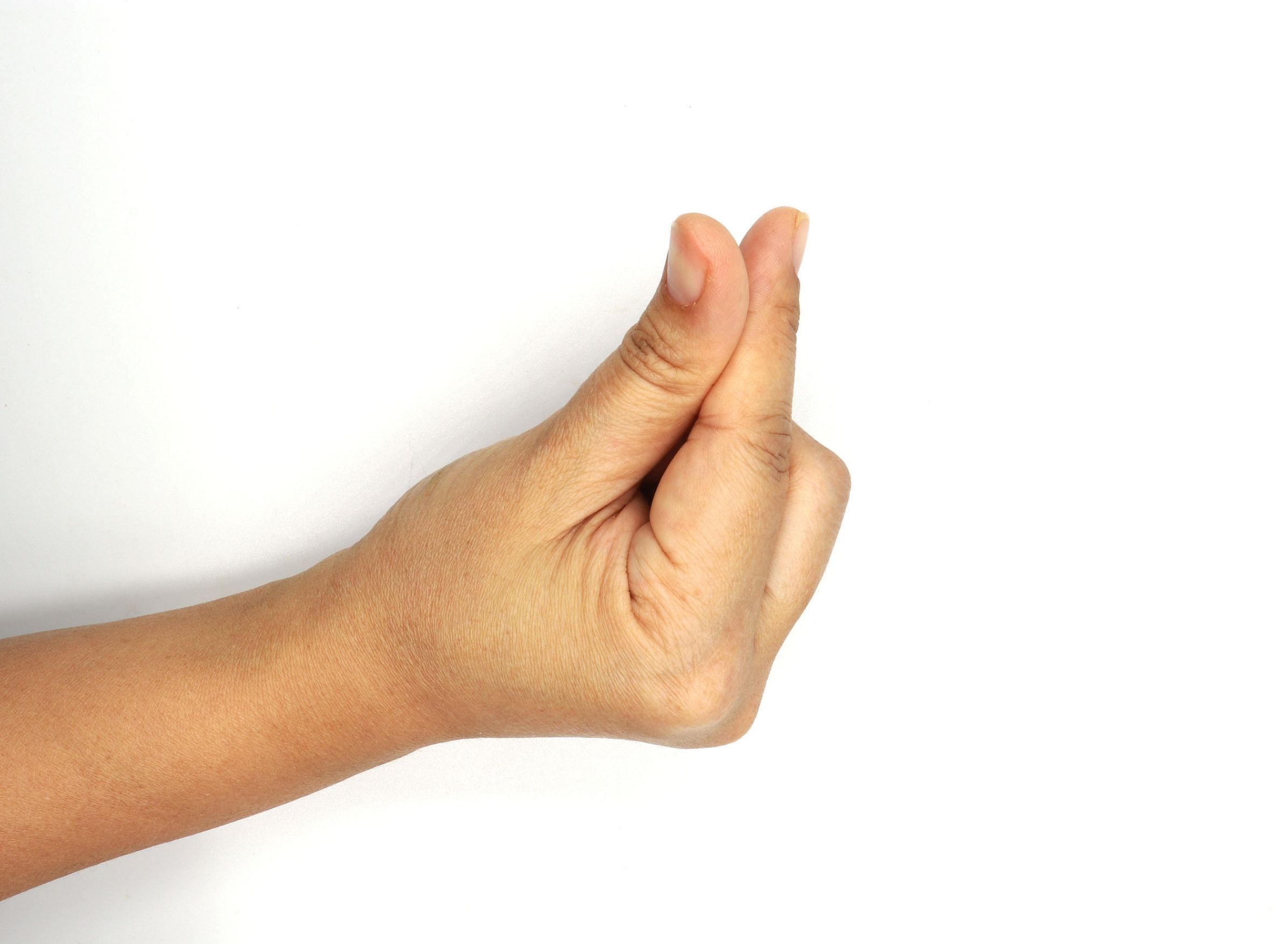
All five fingertips pressed together pointing upward - this gesture most commonly means "what do you want?" or "what are you doing?" Used slowly, it asks a genuine question. Used sharply, it signals frustration or exasperation. The accompanying phrase is almost always Ma che fai? ("But what are you doing?") The speed and the eyebrow position tell you everything about which meaning is intended.
How to Make It Correctly
Bring all five fingertips together to a single point, palm facing upward, held at chest height. The wrist can bounce slightly for emphasis. Done too rigidly it loses its expressiveness — the gesture is fluid and relaxed. Italians have been making it since childhood without thinking about it, which is exactly how it should look.
What Is the 🤌 Emoji Actually Called?
Officially, it's the "pinched fingers" emoji, added to Unicode in 2020 - widely credited to Italian internet culture lobbying for its inclusion. In Italy, the gesture itself is sometimes called mano a borsa (handbag hand) or simply il gesto italiano. It became one of the most requested emoji additions in Unicode history.
Italian Hand Gestures and Their Meanings - The Full List
Italy has over 250 documented gestures. Here are the most essential ones, including eight gestures rarely covered in basic guides:
The Finger Purse - 🤌 - Ma che fai?
Fingertips pinched together, palm up. The classic. Means "what are you doing?" or general exasperation. Universal in Italy; guaranteed to make locals smile if a tourist uses it correctly.
The Wrist Roll - Andiamo!
Rotate the hand forward from the wrist in a rolling motion. Means "let's go" or "get on with it." Casual and friendly - safe for anyone to use.
The Cheek Screw - Che buono!
Press the index finger into the cheek and rotate. Signals that something - usually food - is absolutely delicious. One of the friendliest gestures in the Italian repertoire.
The Eyelid Pull - Occhio!
Pull the lower eyelid down with one fingertip. Means "watch out" or "I'm watching you" depending on tone. Occhio (eye) is the word that goes with it - and the expression on the face does the rest.
The Temple Screw - Sei pazzo!
Press the index finger to the temple and rotate. Means "you're crazy." Universally understood; best reserved for people who already know you well enough to take it as affectionate.
The Chin Flick - Chissenefrega!
Brush the fingers outward from beneath the chin. Means "I don't care" or "get lost." Casual between friends; pointed at a stranger it reads as outright dismissal. Use carefully.
The Hand Purse (Slow Version) - Che vuoi?
The slower, more deliberate version of 🤌, with the wrist facing upward and the movement unhurried. Signals "what do you want?" as a genuine question rather than frustration. Tone is everything.
Thumbs Up - Bravo / Ottimo
Means exactly what it means everywhere else - approval, encouragement, "well done." Not rude in Italy. Entirely safe to use in any context.
The Armpit Slap - Offensive
Slap the inner elbow while sharply raising the forearm. Italy's equivalent of the middle finger - and considered ruder in many Italian contexts. Avoid entirely. There is no friendly version.
Mano Cornuta - Tié! / Ward off evil
Extend index finger and pinky while folding the middle fingers. Pointed outward or downward, it wards off the evil eye (malocchio) - a gesture of protection with ancient roots. Pointed directly at a person, it implies their partner is unfaithful. A serious insult when used that way. Direction is everything.
What Does the Italian Biting Hand Gesture Mean?
Of all Italian gestures, the biting hand surprises visitors most — because it looks too dramatic to be real, yet Italians use it with complete sincerity. When someone bites their finger or knuckle in Italy, they are physically acting out the effort of containing an emotion that words alone can't quite capture.
Biting the Index Finger - Anger and Restraint
Biting the index finger signals suppressed anger or frustration — the Italian equivalent of clenching your jaw. It communicates "I am holding myself back." Used in arguments, moments of disbelief, or when something has gone badly wrong. The phrase Porca miseria or Mannaggia typically accompanies it, completing the emotional picture.
Biting the Fist - What Does It Communicate?
Biting the fist is the more intense version — used for stronger emotions: barely contained rage, overwhelming disbelief, or intense desire. If an Italian bites their fist while looking at you, they are either very angry or genuinely stunned by something. The eyes will tell you which. Read the context before you respond.
The Words Italians Say When They Bite Their Hand
The most common accompanying phrases are Porca miseria (damn it), Mannaggia (a softer curse, roughly "dammit"), and Madonna mia (my God). Gesture and phrase form a single complete unit — one without the other loses half the force. If you want to understand Italian emotional expression, learn both together.
Rude Italian Hand Gestures - What to Avoid as a Tourist
Not every Italian gesture is a warm welcome. Some are perfectly fine between close friends but genuinely offensive in the wrong context — and as a visitor, you're almost always in the wrong context for them.
The Chin Flick - Dismissal or Insult?
In the right company, the chin flick (chissenefrega — "who cares") is playful and harmless. Directed at a stranger, shopkeeper, or anyone in a position of authority, it reads as blatant disrespect. As a tourist, the safest approach is to leave it entirely to the Italians and reach for a shrug instead.
The Armpit Slap - Italy's Most Offensive Gesture
No ambiguity here. Slapping the inner elbow while raising the forearm is Italy's most emphatic insult. Ruder than the middle finger in many Italian contexts, with no ironic or friendly version in existence. If you see it directed at you, walk away calmly. If you're tempted to use it, don't.
The Mano Cornuta - Protective or Insulting?
The horn sign (index and pinky extended) has two completely opposite meanings depending entirely on direction. Pointed outward or downward: protection against the evil eye, benign and widely used across Italy. Pointed directly at a person: implies their partner is unfaithful — a deliberate, serious insult. The gesture is identical; the intent and direction make all the difference.
Is Thumbs Up Rude in Italy?
No. A thumbs up in Italy means exactly what it means everywhere else — approval, agreement, encouragement. It is not offensive in any standard context. A slow, exaggerated, sarcastic thumbs up can shift the tone, but in genuine everyday use it is completely safe across all generations and all regions of the country.
Italian Hand Gesture Vocabulary — Finger and Hand Words in Italian
Knowing the Italian words for hand and fingers makes the whole gesture system feel far more logical - and helps you follow along when a local tries to teach you one on the spot.
Italy rewards curious visitors - and nothing signals genuine curiosity about Italian culture more than knowing what people are actually saying with their hands. Whether you use one gesture confidently or simply recognise them when you see them, you'll experience Italy at a level most tourists never reach. For those who want to go even deeper, exploring Italy with a knowledgeable local guide brings these cultural nuances to life in real time. Benvenuto Limos offers private chauffeur-driven tours across Italy, with guides who speak the language - all of it.
Frequently Asked Questions
1. Why do Italians use so many hand gestures while speaking?
Italian hand gestures are deeply rooted in history and culture. Over centuries of foreign rule and regional diversity, gestures became a natural way to express emotions, clarify meaning, and communicate beyond spoken words.
2. How many Italian hand gestures exist?
There are estimated to be over 250 Italian hand gestures, each with specific meanings depending on context, facial expression, and tone.
3. Are Italian hand gestures used all over Italy?
Yes, but their meanings can slightly vary by region. While many gestures are universally understood across Italy, some may have local interpretations depending on the city or area.
4. Is it rude for tourists to use Italian hand gestures?
Not at all. When used respectfully and correctly, Italians often appreciate tourists trying to engage with their culture. However, some gestures can be offensive if misunderstood, so context matters.
5. What is the most common Italian hand gesture?
The classic Italian hand gesture—where all fingers and the thumb come together in a cone shape—is the most iconic. It usually expresses confusion, disagreement, or questioning, depending on the situation.
6. Do Italian hand gestures always need spoken words?
No. Many Italian hand gestures are powerful enough to stand alone without words. In fact, gestures often communicate emotions more clearly than speech.
7. Can learning Italian hand gestures help during travel?
Absolutely. Understanding common Italian hand gestures can help you communicate better, avoid misunderstandings, and feel more connected to Italian culture during your trip.
5. What is the most common Italian hand gesture?
The classic Italian hand gesture—where all fingers and the thumb come together in a cone shape—is the most iconic. It usually expresses confusion, disagreement, or questioning, depending on the situation.
6. Do Italian hand gestures always need spoken words?
No. Many Italian hand gestures are powerful enough to stand alone without words. In fact, gestures often communicate emotions more clearly than speech.
7. Can learning Italian hand gestures help during travel?
Absolutely. Understanding common Italian hand gestures can help you communicate better, avoid misunderstandings, and feel more connected to Italian culture during your trip.
8. What does the Italian biting hand gesture mean?
Biting the hand — typically the index finger or knuckle — is an Italian gesture used to hold back anger or frustration. It signals that you are restraining yourself from saying something you might regret. Italians often accompany it with the phrase Porca miseria (roughly: "damn it") or Mannaggia.
9. What does biting your fist mean in Italian body language?
Biting the fist is a more intense version of the biting hand gesture, conveying stronger suppressed emotion — usually anger, disbelief, or intense desire. It is a dramatic, emphatic gesture used when words feel insufficient.
10. What does Ma che fai mean and what gesture goes with it?
Ma che fai means "but what are you doing?" in Italian. It is typically accompanied by the classic pinched-fingers gesture (the 🤌), where all fingertips and the thumb meet in a point. Together, the phrase and gesture express exasperation, confusion, or disbelief.
11. What does thumbs up mean in Italy — is it rude?
A thumbs up in Italy carries the same positive meaning as in most Western countries — approval, agreement, or "good job." It is not considered rude. However, the context matters: in some older or rural communities, an extended thumb can still occasionally carry a different connotation, so pairing it with a smile is always safe.
12. What are rude Italian hand gestures tourists should avoid?
The armpit slap (slapping the inner elbow while raising the forearm) is one of Italy's most offensive gestures — equivalent to an extended middle finger. The chin flick (brushing the fingers outward under the chin) means "I don't care" or dismissal, which can offend in the wrong context. The Mano Cornuta (horn sign) can be insulting if directed at a person rather than used to ward off evil.
13. What does the Italian horn hand gesture mean?
The Mano Cornuta — index and pinky fingers extended like horns — has two distinct meanings in Italy. Directed outward or downward, it wards off the evil eye (malocchio). Directed at a person, it is a serious insult suggesting their partner is unfaithful. Context and direction make all the difference.
14. How do you say finger and hand in Italian?
The Italian word for finger is dito (plural: dita). The thumb is pollice, the index finger is indice, the middle finger is medio, the ring finger is anulare, and the little finger is mignolo. Hand in Italian is mano (plural: mani), and fist is pugno.